









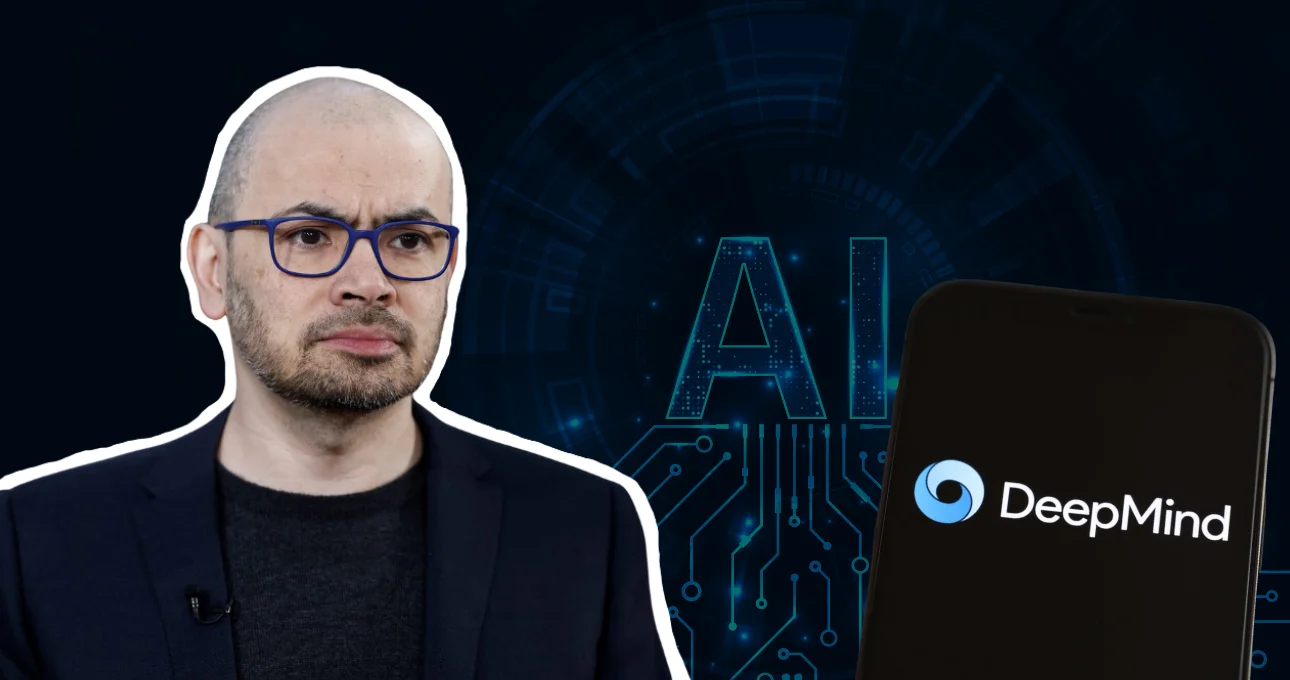
Artificial intelligence has made breathtaking progress over the past decade. From large language models that can write essays and code, to systems that generate images, music, and video on demand, AI is now deeply woven into daily life and business. Yet despite this rapid advancement, today’s AI models are still missing critical capabilities, according to Demis Hassabis, CEO and co-founder of Google DeepMind.
Hassabis, one of the world’s most influential AI researchers, has repeatedly emphasized that while modern AI appears impressive, it remains fundamentally limited. His view challenges the growing perception that current generative AI systems are close to human-level intelligence. Instead, he argues that today’s models represent an important—but incomplete—step toward truly intelligent machines.
The Illusion of Intelligence
At first glance, modern AI systems seem remarkably capable. They can hold conversations, answer complex questions, solve mathematical problems, and even reason through multi-step tasks. However, Hassabis warns that much of this intelligence is surface-level pattern recognition, not genuine understanding.
Most leading AI models today are trained on massive datasets using statistical techniques that help them predict the next word, image pixel, or action. While this enables impressive outputs, it does not equate to true reasoning, planning, or comprehension.
“These systems don’t actually understand the world in the way humans do,” Hassabis has noted in various discussions. “They’re very good at correlating patterns, but they lack deeper models of reality.”
What Critical Capabilities Are Missing?
According to Hassabis and other AI researchers at DeepMind, several foundational capabilities are still absent from today’s AI systems.
- True Reasoning andPlanning[Text Wrapping Break]CurrentAI models struggle with long-term reasoning and strategic planning. While they can solve short, well-defined problems, they often fail when tasks require sustained logic, abstract thinking, or adapting strategies over time. Humans, by contrast, can plan years ahead, reason about hypothetical scenarios, and revise decisions based on changing goals.
- Robust WorldModels[Text Wrapping Break]Akey limitation is the absence of accurate internal world models—mental representations of how the physical and social world works. Humans develop these models from infancy, allowing them to predict outcomes, understand cause and effect, and apply knowledge across domains. Most AI systems lack this grounded understanding, making them brittle when faced with novel situations.
- Transfer Learning andGeneralization[Text Wrapping Break]WhileAI excels in narrow domains, it struggles to generalize knowledge across tasks. A system trained to master language may fail at physical reasoning, while one optimized for vision may struggle with abstract logic. Hassabis argues that artificial general intelligence (AGI) will require systems that can seamlessly transfer learning across domains, much like humans do.
- Memory and ContinualLearning[Text Wrapping Break]Humanintelligence is shaped by long-term memory and continuous learning over a lifetime. In contrast, many AI models operate in stateless or semi-stateless modes, with limited ability to remember past interactions or evolve dynamically without retraining. This restricts adaptability and personalization.
- Common SenseUnderstanding[Text Wrapping Break]Despitetheir fluency, AI models often lack basic common sense. They may generate answers that sound confident but are factually incorrect or logically inconsistent. This is a direct consequence of training systems to mimic language rather than understand reality.
Why Scaling Alone Isn’t Enough
One popular belief in the AI community is that scaling models with more data and compute will eventually solve these limitations. Hassabis takes a more nuanced view. While scale has undeniably driven recent breakthroughs, he believes it is not sufficient on its own.
“Scaling gets you part of the way,” he has suggested, “but at some point, you need new ideas, architectures, and learning paradigms.”
DeepMind’s own research reflects this philosophy. Rather than relying solely on ever-larger language models, the company has invested heavily in reinforcement learning, neuroscience-inspired architectures, and hybrid systems that combine symbolic reasoning with neural networks.
The DeepMind Approach: Beyond Generative AI
DeepMind has long focused on building systems that learn through interaction, not just observation. Its work on AlphaGo, AlphaZero, and AlphaFold demonstrated how AI could surpass human expertise by developing internal models and reasoning strategies.
Hassabis believes the next major leap in AI will come from systems that can actively explore, experiment, and learn from the environment, much like humans and animals do. This approach contrasts with passive data consumption, which dominates today’s generative AI models.
Another critical focus area is embodied intelligence—AI that interacts with the physical world through robots or simulated environments. Physical interaction forces AI systems to confront reality, develop causal understanding, and deal with uncertainty.
Implications for Business and Society
Hassabis’ perspective has important implications for how businesses and governments view AI capabilities today.
While generative AI can deliver significant productivity gains, organizations should be cautious about overestimating its reliability or autonomy. AI systems still require human oversight, especially in high-stakes domains such as healthcare, finance, law, and national security.
At the same time, the gaps in current AI capabilities present enormous opportunities. Companies that invest in next-generation AI research, rather than short-term automation alone, could shape the future of intelligent systems.
AI Safety and Alignment Remain Central
The limitations of today’s AI models also intersect with concerns around AI safety and alignment. Systems that lack true understanding are more likely to behave unpredictably, hallucinate information, or produce misleading outputs.
Hassabis has consistently emphasized the importance of building AI responsibly. As models grow more powerful, ensuring they are aligned with human values, transparent in their reasoning, and robust against misuse becomes increasingly critical.
DeepMind’s research agenda includes interpretability, robustness, and alignment—areas that will be essential as AI moves closer to general intelligence.
The Road to Artificial General Intelligence
Despite the gaps, Hassabis remains optimistic. He believes that AGI is achievable, but not imminent. The journey will require breakthroughs in learning algorithms, architectures, and our understanding of intelligence itself.
Rather than viewing today’s AI as the endgame, Hassabis frames it as an early chapter. Generative models have unlocked powerful new interfaces and capabilities, but the deeper challenge lies in building systems that can truly reason, understand, and learn like humans.
Looking Ahead
As AI hype continues to surge, Demis Hassabis’ message serves as a crucial reality check. Today’s AI models are undeniably powerful—but they are not yet intelligent in the human sense.
The next phase of AI progress will not be defined by bigger models alone, but by smarter systems with deeper understanding, stronger reasoning, and genuine adaptability. For researchers, businesses, and policymakers alike, recognizing these limitations is essential to navigating the future of artificial intelligence.
The most transformative AI breakthroughs, Hassabis suggests, are still ahead of us.