









How to Build a Winning Investor Deck That Gets Attention—and Capital
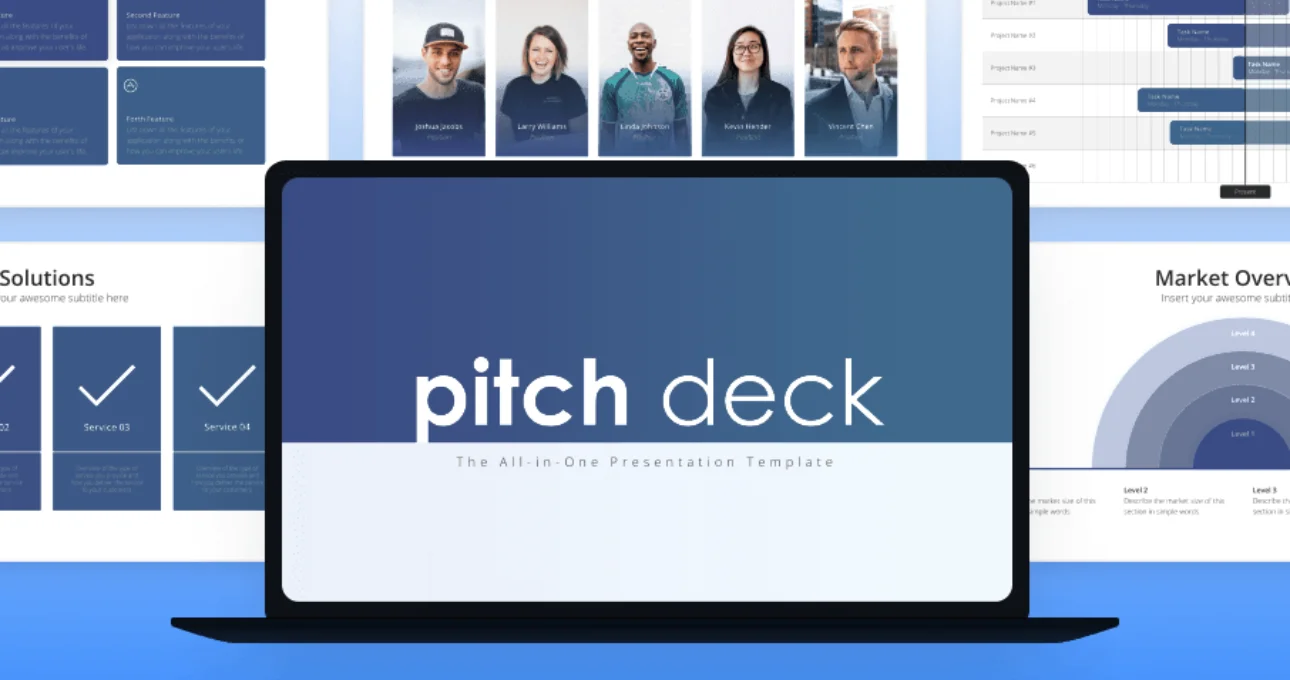
In the venture world, your pitch deck is your first impression, your story, and your credibility packaged into 12–15 slides. It’s not a product demo. It’s not a feature list. It’s a business case for scale.
Investors don’t fund confusion or clutter—they fund clarity. This guide breaks down exactly what a powerful pitch deck should contain, why each slide matters, and how founders can turn their vision into a compelling investment narrative.
Why a Pitch Deck Matters More Than Ever
Tech funding is competitive. Thousands of startups apply for capital every month. Most pitch decks get less than 3 minutes of investor attention before a decision is made to pass or proceed.
A strong deck:
✅ Opens doors
✅ Creates curiosity
✅ Positions you as a category winner
✅ Gets you to the next meeting
Your objective isn’t to raise money on the spot.
Your objective is to earn investor interest.
The 12-Slide Formula Investors Expect
1. Title & Vision
A crisp one-line description:
“The AI assistant that automates enterprise reporting.”
Add:
- Company name
- Logo
- Your mission or bold vision
This slide should communicate ambition in under 7 seconds.
2. The Problem
Define the pain—not the product.
Investors ask:
- Who is suffering?
- Why is this a priority?
- What happens if it’s not solved?
Use data, not drama:
“85% of enterprises still rely on manual processes costing $900B globally.”
If the problem is big, the opportunity is big.
3. The Solution
Now introduce your product, platform, or technology.
Show:
- What it does
- How it works at a high level
- The outcome it creates
Focus on impact, not features:
“Reduces reporting time from 6 hours to 6 minutes.”
4. Product Demo or Screens
Keep it clean and visual. Two or three screens max. Investors want to see:
- Real UI
- Simplicity
- Proof that it exists (or is close)
A picture speaks louder than 50 features.
5. Market Size
Investors only chase scalable markets.
Show:
- TAM (total market)
- SAM (serviceable market)
- SOM (target market)
If the market is exploding—AI, automation, cybersecurity—you’re already ahead.
6. Traction
The slide investors care about most.
Examples:
- Revenue growth
- Users
- Retention
- Paid pilots
- Partnerships
- Waitlist numbers
Early traction says:
“We’re not guessing—we’re winning.”
7. Business Model
How you make money:
- SaaS subscription?
- Marketplace fees?
- Usage-based pricing?
Add:
- ARPU
- Pricing tiers
- Expansion potential
A confusing model kills momentum.
8. Go-To-Market Strategy
How you acquire customers:
- Direct sales?
- Product-led growth?
- Channel partners?
- Enterprise pilots?
Investors want to see repeatability—not random tactics.
9. Competitive Landscape
Avoid saying “We have no competition.”
That signals naivety.
Show:
- Existing players
- Your advantages
- What makes you defensible (tech, data, patents, speed)
Position yourself as the category challenger—or future category leader.
10. Technology or IP Advantage
If you’re a tech company, this matters.
Highlight:
- Proprietary tech
- AI edge
- Patents
- Infrastructure
- Data advantage
Prove they can’t copy you easily.
11. Team
Investors fund people.
Show:
- Founders
- Domain expertise
- Key leadership roles
A-grade teams win even with B-grade products.
12. The Ask
This is where many founders fail.
Include:
- How much you’re raising
- How long it lasts (12–24 months runway)
- What milestones it funds (team, product, GTM)
Example:
“Raising $2M to reach $1M ARR, expand to US market, and onboard 200 enterprises.”
End with confidence—not apology.
The Golden Rules of a Winning Deck
12–15 slides max
Minimal text, visual storytelling
One idea per slide
Data over opinions
Clarity over cleverness
If an investor can’t explain your business in one sentence after the meeting, you’ve lost the deal.
Final Takeaway
A pitch deck isn’t about impressing investors.
It’s about aligning them.
When your narrative is clear, your market is large, and your traction is real—you shift from chasing capital to attracting capital.