









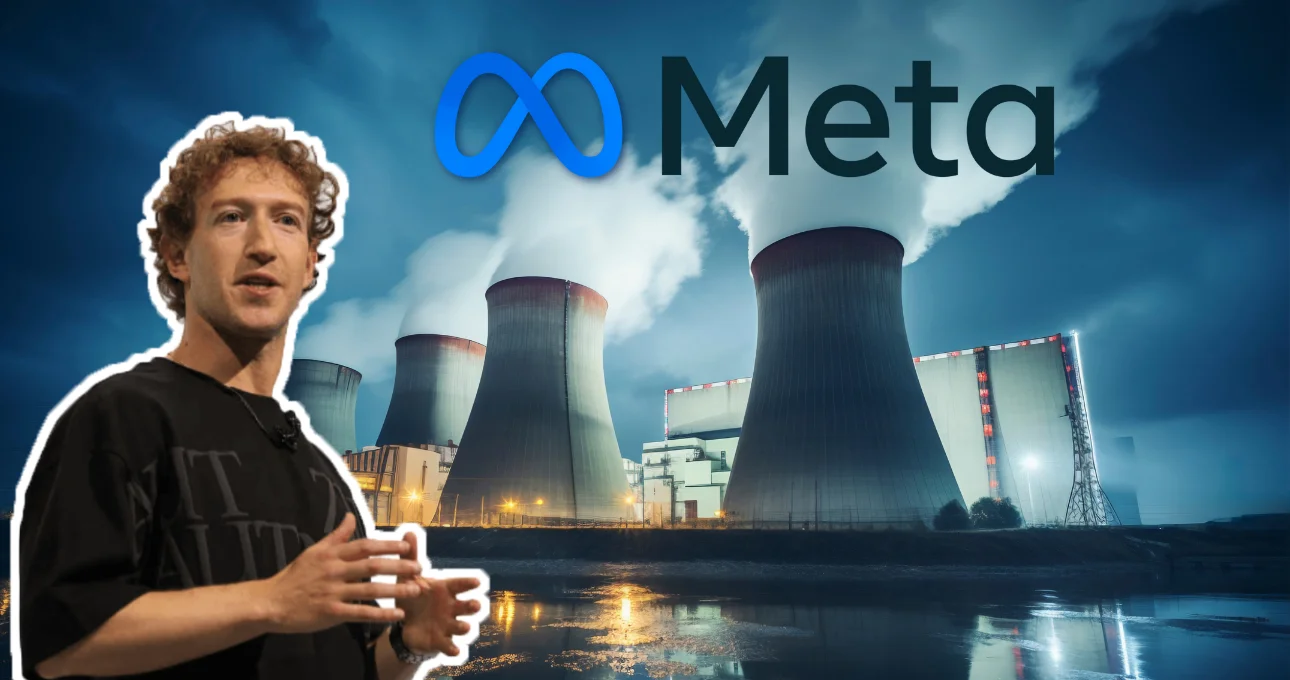
Artificial intelligence is often described as a race—for talent, data, chips, and models. But as Meta’s latest move makes clear, AI is also an energy race. In backing nuclear power projects to secure long-term electricity for its expanding data center footprint, Meta is signaling a profound shift in how Big Tech views energy: not as a utility expense, but as strategic infrastructure.
This pivot underscores a blunt reality facing the AI economy. As generative AI, large language models, and agentic systems scale rapidly, traditional power grids are struggling to keep up. When a company as large as Meta starts investing directly in electricity generation, it’s a sign that grid constraints are no longer theoretical—they’re operational bottlenecks.
AI’s Explosive Energy Appetite
Modern AI systems are extraordinarily power-hungry. Training large models requires massive compute clusters running continuously, while inference at scale adds ongoing demand. Data centers supporting AI workloads consume far more electricity than those running traditional cloud services.
According to industry estimates, AI-driven data center power demand is growing exponentially, with hyperscalers racing to secure reliable, always-on energy sources. Renewable energy alone—while critical—often lacks the consistency required for round-the-clock AI operations without extensive storage infrastructure.
This is the context behind Meta’s nuclear bet: AI needs baseload power, not intermittent supply.
Why Meta Is Turning to Nuclear Energy
Meta’s decision to support nuclear projects is rooted in long-term thinking. Nuclear power offers several advantages that align closely with AI infrastructure needs:
- 24/7 reliability without weather dependency
- Zero-carbon electricity, supporting climate commitments
- High energy density, ideal for data center clusters
- Long operational lifespans, matching decades-long AI roadmaps
By pairing its data center expansion with dedicated power generation, Meta is effectively vertically integrating its energy supply—a move once reserved for utilities and heavy industry.
This strategy reduces exposure to grid congestion, price volatility, and regulatory uncertainty, while giving Meta more control over its AI future.
From Cloud Computing to Power Politics
For years, Big Tech companies focused on optimizing software, chips, and cloud infrastructure. Energy procurement was largely handled through power purchase agreements (PPAs) and renewable offsets.
That model is breaking down.
As AI workloads scale, access to electricity is becoming a competitive differentiator. Companies that can secure abundant, stable, and affordable power will be able to train larger models faster, deploy AI services more reliably, and outpace rivals constrained by grid limits.
Meta’s nuclear move reflects a broader trend: energy strategy is now inseparable from AI strategy.
A Signal to the Entire Tech Industry
When Meta—already one of the world’s largest corporate buyers of renewable energy—embraces nuclear, it sends a powerful signal across Silicon Valley and beyond.
Other hyperscalers are watching closely:
- Cloud providers expanding AI services
- Chipmakers optimizing for energy-efficient compute
- Startups building AI-native data centers
- Governments grappling with grid modernization
The message is clear: AI growth will force a rethinking of national energy infrastructure, not just corporate sustainability plans.
Nuclear’s Changing Reputation in the AI Era
For decades, nuclear energy has been politically sensitive, weighed down by concerns around safety, waste, and cost. But the AI boom is reshaping the conversation.
New developments—such as small modular reactors (SMRs) and advanced nuclear designs—promise faster deployment, improved safety, and lower upfront costs. For tech companies under pressure to decarbonize while scaling compute, nuclear is increasingly seen as a pragmatic solution, not a controversial one.
Meta’s backing lends credibility to nuclear as a cornerstone of the AI-powered economy.
Sustainability vs. Scale: A New Tradeoff
Big Tech has long positioned itself as a leader in sustainability. But AI introduces a difficult tension: how to scale energy-intensive technologies without blowing past climate goals.
Nuclear offers a way to reconcile this tradeoff. Unlike fossil fuels, it provides massive power without direct carbon emissions. Unlike renewables alone, it offers consistency.
Meta’s approach suggests a future where:
- Nuclear provides baseload power
- Renewables complement peak demand
- AI systems are designed for energy efficiency
- Data centers are co-located with generation assets
This hybrid energy model could define the next phase of sustainable AI infrastructure.
Grid Constraints Are Now a Business Risk
One of the most striking implications of Meta’s move is what it reveals about the state of power grids.
Across the US and globally, grid capacity upgrades lag behind demand growth. Permitting delays, transmission bottlenecks, and aging infrastructure are slowing new connections—especially for large data centers.
For AI-driven companies, this translates into real risks:
- Delayed data center launches
- Limited geographic expansion
- Higher operating costs
- Reduced model training capacity
By investing directly in generation, Meta is sidestepping these constraints—and rewriting the rules.
Energy as Competitive Moat
Just as proprietary data and custom AI chips have become competitive moats, energy access is emerging as a new strategic advantage.
Companies that control or influence their power supply can:
- Scale AI faster
- Lock in predictable costs
- Meet sustainability targets
- Reduce regulatory exposure
Meta’s nuclear push positions energy not as a background concern, but as core infrastructure for the AI age.
Policy and Regulatory Implications
Big Tech’s entry into nuclear energy will inevitably attract regulatory scrutiny. Governments must balance:
- Encouraging clean energy investment
- Ensuring grid stability
- Managing nuclear safety and waste
- Preventing energy monopolization
At the same time, policymakers may welcome private capital helping modernize energy systems strained by AI growth. Meta’s move could accelerate regulatory reforms around nuclear deployment and grid expansion.
The Bigger Picture: AI Is Rewriting More Than Software
Meta’s nuclear strategy underscores a deeper truth: AI is reshaping physical infrastructure, not just digital platforms.
The AI revolution touches:
- Energy systems
- Supply chains
- Semiconductor manufacturing
- Real estate and land use
- National competitiveness
In this sense, AI is closer to an industrial revolution than a software upgrade.
Conclusion: The AI Race Is an Energy Race
Meta’s backing of nuclear power marks a turning point in how Big Tech approaches energy. It acknowledges what many in the industry already feel: the future of AI depends as much on electrons as on algorithms.
As AI models grow larger and more autonomous, companies can no longer treat electricity as a given. Energy generation is becoming strategic infrastructure—and those who secure it early will shape the next era of AI dominance.
The takeaway is simple but profound:
AI isn’t just changing how we compute. It’s changing how we power the world.