










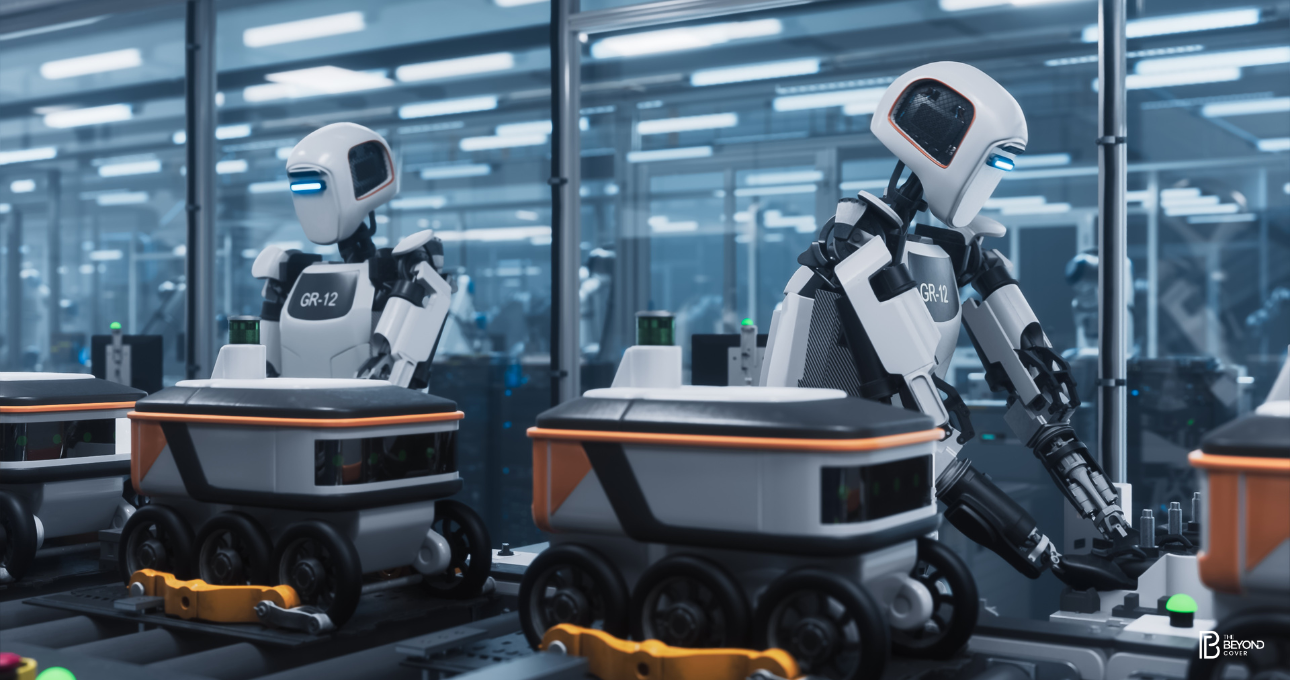
India has outlined an ambitious strategic roadmap aimed at building self-reliant capabilities in robotics and physical artificial intelligence (AI), signaling a decisive push to reduce dependence on foreign technologies while strengthening domestic innovation. The initiative aligns closely with the government’s broader vision of Atmanirbhar Bharat and positions robotics and physical AI as critical pillars of India’s future industrial and digital economy.
India’s Vision for Robotics and Physical AI
The roadmap focuses on developing end-to-end robotics ecosystems, spanning research, manufacturing, deployment, and workforce readiness. Physical AI—systems where AI directly interacts with the physical world through robots, sensors, and machines—is seen as a transformative force across sectors such as manufacturing, healthcare, agriculture, logistics, and defense.
Policymakers have emphasized that robotics will no longer be limited to automation alone. Instead, India aims to build intelligent, adaptive, and autonomous systems capable of learning from real-world environments. This marks a shift from software-centric AI to hardware-integrated intelligence that can operate at scale in complex Indian conditions.
Boosting Domestic Manufacturing and Supply Chains
A central pillar of the roadmap is strengthening local manufacturing of robotic components, including sensors, actuators, embedded systems, AI chips, and edge computing hardware. By reducing reliance on imported parts, India hopes to create resilient supply chains and lower production costs for startups and enterprises alike.
The government plans to leverage existing schemes that support electronics manufacturing and deep-tech innovation, while encouraging public-private collaboration. Startups working in industrial robotics, warehouse automation, drones, and service robots are expected to benefit from easier access to funding, testing infrastructure, and procurement opportunities.
Research, Talent, and Skill Development
Recognizing that talent is as critical as technology, the roadmap places strong emphasis on robotics education and skill development. Leading academic institutions and research labs are expected to play a major role in advancing physical AI research, including areas such as reinforcement learning, human-robot interaction, and autonomous navigation.
New training programs are expected to focus on multidisciplinary skills—combining mechanical engineering, AI models, computer vision, and embedded systems. This approach aims to prepare India’s workforce for next-generation jobs in robotics design, deployment, and maintenance.
Sector-Wise Impact and Use Cases
The roadmap identifies several priority sectors where robotics and physical AI adoption can deliver immediate impact. In manufacturing, intelligent robots can boost productivity and precision, supporting India’s ambition to become a global manufacturing hub. In healthcare, assistive robots and AI-powered diagnostic devices can help bridge gaps in access and affordability.
Agriculture is another key focus area, with autonomous machines expected to improve efficiency in planting, harvesting, and crop monitoring. Meanwhile, logistics and smart infrastructure could see gains from AI-driven automation that enhances speed, safety, and cost efficiency.
Strategic and Global Significance
India’s push for self-reliant robotics also has strategic implications. As global competition intensifies around AI and automation, domestic capabilities in physical AI are increasingly viewed as essential for economic security and technological sovereignty.
By investing early in robotics platforms tailored for local needs, India aims to not only meet domestic demand but also emerge as a global exporter of robotics solutions for emerging markets.
Looking Ahead
India’s strategic roadmap for robotics and physical AI marks a significant step toward shaping the country’s technological future. While challenges remain—ranging from infrastructure gaps to commercialization hurdles—the focus on self-reliance, talent, and real-world deployment positions India to play a larger role in the global robotics landscape.
As physical AI moves from labs to factory floors and farmlands, India’s next growth chapter may well be powered by intelligent machines built at home.