










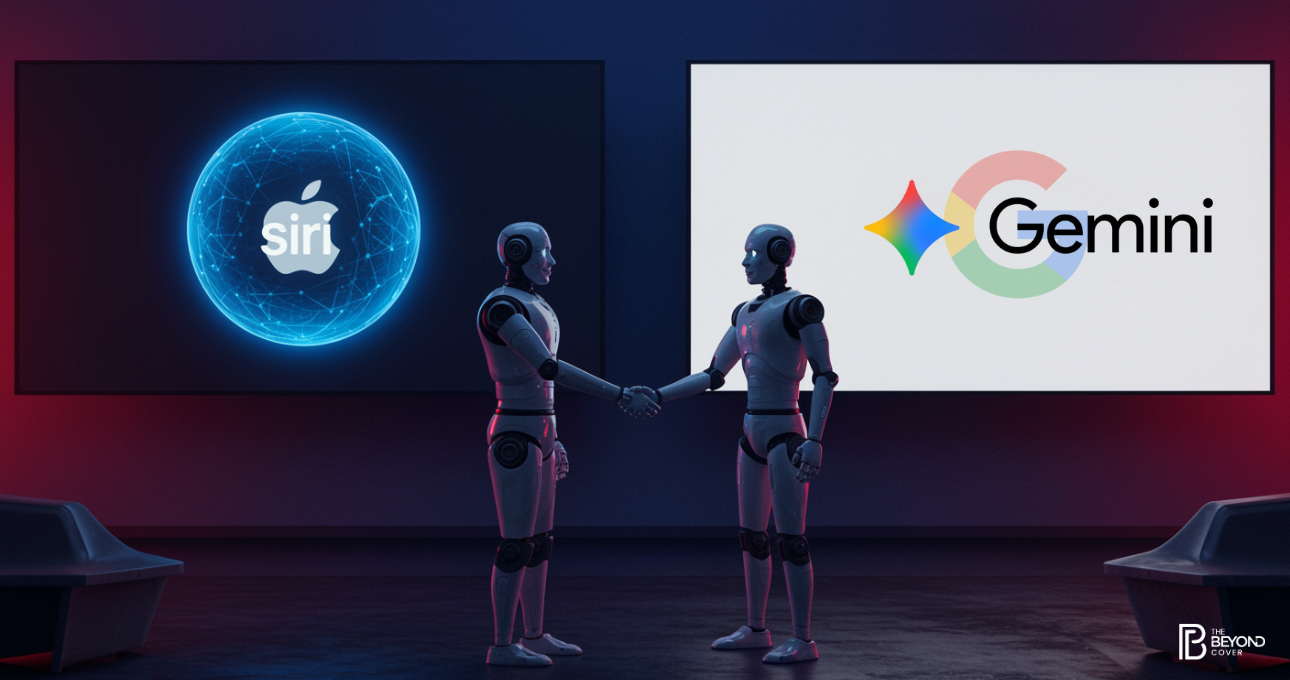
Apple and Google have stunned the tech world with a multi-year partnership to bring Google’s Gemini AI models into the heart of Apple’s Siri voice assistant and broader Apple Intelligence features.
As exciting as this collaboration sounds—finally giving Siri more capable reasoning and conversational intelligence—it has also unleashed a wave of privacy concerns among users, regulators, and privacy advocates. After all, Apple built its brand on “privacy first” principles, while Google’s business often thrives on rich user data. So how do these two giants reconcile their approaches? What safeguards are in place to protect your personal information? And are the assurances from Apple and Google enough to calm widespread skepticism?
Let’s explore the privacy implications of Gemini-powered Siri, understand what Apple and Google are saying, and break down why users are worried.
A Historic AI Partnership—But With Privacy in the Crosshairs
Apple’s announcement that Siri will be powered by Google’s Gemini models marks one of the most unusual collaborations between two fierce competitors in tech. Previously, Apple tried enhancing Siri using its own models and even integrated OpenAI’s ChatGPT in limited ways—but performance never matched market expectations. Gemini’s superior reasoning and contextual abilities are seen as the missing ingredient for a modern intelligent assistant.
However, because Gemini was developed and trained by Google—whose ad-driven ecosystem has historically drawn scrutiny for data practices—the question of who has access to your data has become front and center.
The Core Privacy Concern: Is Google Seeing Your Siri Data?
At the heart of the debate is a simple user worry:[Text Wrapping Break]Will my Siri queries—or worse, personal voice interactions—be sent to Google?
Publicly, both Apple and Google have tried to provide reassurance:
- Apple says Siri will continue to adhere to its industry-leading privacy standards and that any advanced AI processing will remain under Apple’s control, using its Private Cloud Compute (PCC) infrastructure.
- Google has explicitly stated that Gemini will be integrated under Apple’s privacy rules, and that it will not receive Apple user data tied to personal identities.
The core claim is that Siri will send anonymized and encrypted queries through Apple’s PCC, without sharing Apple IDs, device identifiers, or personal metadata with Google. This is the mechanism designed to prevent Google from learning which user asked what question.
Yet, not every expert or user is convinced this fully addresses the concern.
How Apple Claims Privacy Will Be Preserved
Apple has framed the deal as one where Geminiled AI processing occurs on its own trusted infrastructure, meaning:
- On-device and Private Cloud Compute handle sensitive personal context
- Encrypted, anonymized requests are sent to Gemini, without Apple identity
- Google receives no persistent user identifiers
- Users don’t have to sign in with a Google account for Gemini features to work
This approach mirrors how Apple currently handles Apple Intelligence when iOS devices can’t fully process data locally—pushing heavier tasks into a secure cloud environment. Crucially, Apple’s architecture is designed such that only Apple can correlate user identity with query content.
Apple has also signaled that no Google or Gemini branding will appear in Siri, and the experience will feel native and Apple-first to end users.
User Skepticism and Privacy Advocates’ Concerns
Despite these assurances, some privacy advocates remain uneasy, and users have voiced distrust on forums and social platforms.
Common concerns include:
- Indirect data leakage: Even anonymized patterns can reveal sensitive user behavior over time.
- Potential misuse or future policy changes: Agreements today may not bind future versions forever.
- Broader context use: Gemini excels at contextual understanding, which critics fear could lead to deeper profiling if integration isn’t airtight.
One of the most vocal critics, Elon Musk, even called the partnership “unreasonable” due to how it could further concentrate AI control within Google’s ecosystem, indirectly hinting at data power concerns.
User discussions on platforms like Reddit show everyday people worrying about whether Gemini integration means Google gets access to their iPhone queries—even if official statements deny that.
What Apple and Google SAY About Data Sharing
Apple’s Position
Apple maintains that:
- Google will not see identifiable user data
- Privacy-sensitive queries will remain encrypted and anonymous
- On-device processing continues where possible
- Users may get a toggle to enable or disable advanced AI features
Analysts also note that Apple will fine-tune Gemini to comply with its own safety, style, and privacy standards—meaning responses are tailored without compromising user data policies.
Some reports suggest Apple may not formally acknowledge the Google connection in the UI at all, further insulating users from thinking their data is being shared externally.
Google’s Position
Google’s official stance is simple:
- Gemini will work under Apple’s strict privacy rules
- Google will not receive Apple user data linked to personal identities
- The partnership focuses on capability, not data access
In public statements, Google emphasizes its role as a technology provider, not a data recipient.
Balancing Innovation and Privacy
This scenario highlights a classical tension in AI: innovation vs. privacy.
On one hand, integrating Gemini into Siri promises:
- More contextual, human-like interactions
- Better handling of complex queries
- Richer, generative answers, beyond simple commands
But on the other hand, pushing AI processing behind the scenes into cloud-based models—even anonymized ones—raises valid questions about whether users fully understand what data is shared and how it is processed.
Academic studies suggest that voice assistants—by design—collect extensive interaction data, and users often lack visibility into what exactly is stored or used for model improvements.
Thus, transparency and user education become as important as architectural safeguards.
Regulatory and Long-Term Trust Considerations
Regulators in the U.S., EU, and Asia have all been tightening scrutiny of AI systems—especially those that involve cross-company integrations and cloud-based processing. GDPR, CCPA, and other privacy regimes emphasize data minimization, explicit consent, and transparency.
Even if Apple’s current approach technically complies, public perception and regulatory interpretations could differ. Trust is not just built on architecture—it’s built on clarity, control, and accountability.
Apple may need to offer:
- Clear explanations in settings
- Easy opt-out toggles
- Transparent data handling disclosures
To truly alleviate concerns.
What Users Should Watch For
If you’re an iPhone user anticipating Gemini-powered Siri, here’s what to consider:
Check Privacy Settings
Look for:
- Siri & Search settings
- AI/Apple Intelligence toggles
- Any opt-out options for cloud processing
Understand When Siri Goes to the Cloud
Not all Siri commands require external processing; basic functions may still operate locally.
Review How Apple Describes Data Usage
Apple typically updates its privacy policies and FAQs—review them for Gemini-specific disclosures.
Monitor Community Feedback
Early adopters and reviews will reveal practical privacy experiences once the feature rolls out.
Conclusion: Not Perfect, But Thoughtfully Designed
The Gemini-powered Siri partnership is one of the most consequential moves in consumer AI. It promises a leap forward in voice intelligence while forcing a reckoning about privacy boundaries.
Apple’s assurances and cloud architecture are designed to protect user data, and Google has publicly affirmed it won’t access identifiable Siri data.
But true confidence will come with user transparency, clear controls, and independent audits—not just corporate promises.
As AI becomes more integrated into our daily lives, privacy won’t just be a technical checkbox—it will be a strategic differentiator that determines which platforms users trust and embrace.