










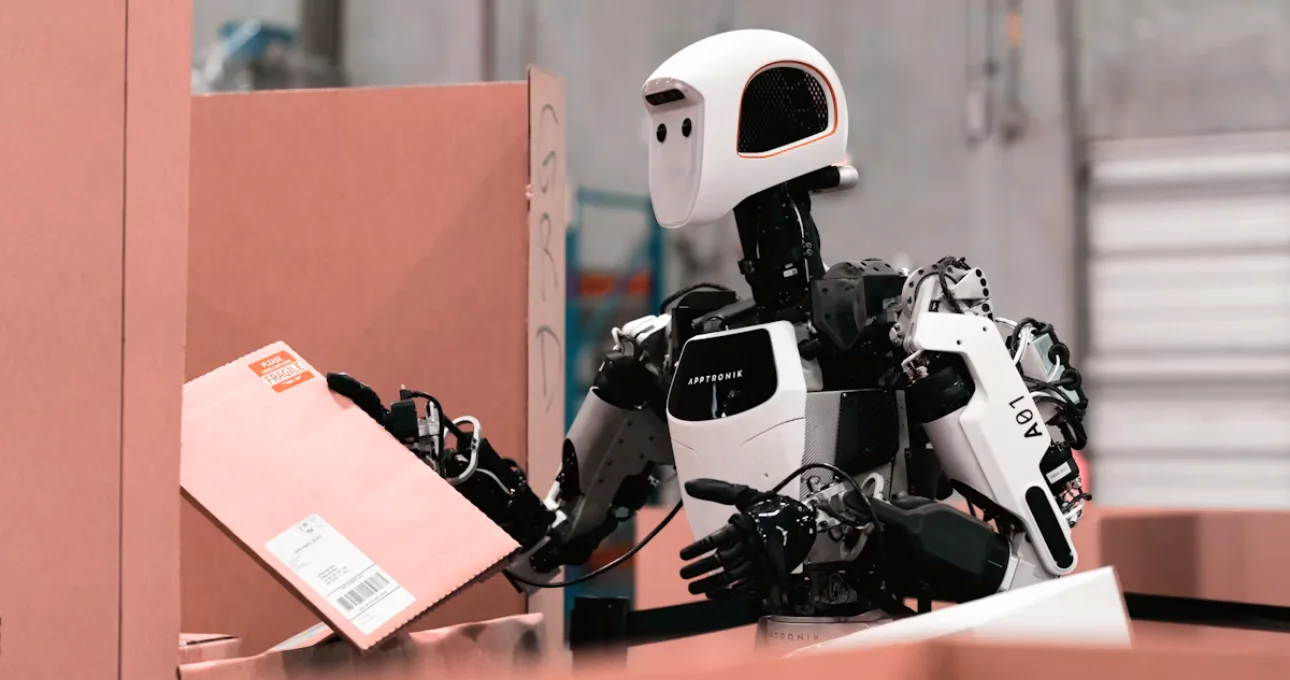
Are Humanoid Robots Finally Ready for Work?
For decades, humanoid robots have lived more in science fiction than on factory floors. They dazzled audiences with demos but rarely delivered real-world utility at scale. That perception may now be changing. Google DeepMind’s accelerating push into humanoid robotics is reigniting a long-standing question across tech and industry: are working humanoid robots finally ready for the real world?
From Intelligence in the Cloud to Intelligence in the Body
Google DeepMind built its reputation mastering abstract intelligence—defeating world champions in games, optimizing energy systems, and advancing large language models. But the next frontier is physical. Intelligence that can see, reason, plan, and act in dynamic environments.
Humanoid robots are the ultimate test of this vision. Unlike single-purpose industrial machines, humanoids are designed to operate in human-centric spaces—factories, warehouses, hospitals, and eventually homes—without requiring environments to be rebuilt around them.
DeepMind’s work focuses on what many experts consider the missing piece: general-purpose robotic intelligence. The challenge isn’t just movement—it’s perception, reasoning, and adaptation. A robot must understand messy, unpredictable real-world scenarios, not just repeat scripted tasks.
Why Humanoids Are Suddenly Advancing Faster
Several forces are converging to push humanoid robots closer to viability:
- Foundation models forrobotics[Text Wrapping Break]Largemultimodal AI models can now process vision, language, and sensor data together. This allows robots to understand instructions like “pick up the red box next to the conveyor” without hard-coded rules.
- Sim-to-reallearning[Text Wrapping Break]Advancedsimulation environments allow robots to train millions of scenarios virtually before ever touching the real world. DeepMind has been a leader in reinforcement learning, giving robots better decision-making under uncertainty.
- Better hardware and controlsystems[Text Wrapping Break]Modernhumanoids are stronger, more balanced, and more energy-efficient. Precision motors, improved batteries, and real-time control systems are finally catching up with AI ambition.
- Economicpressure[Text Wrapping Break]Laborshortages, aging workforces, and rising operational costs are forcing companies to look beyond traditional automation. Humanoid robots promise flexibility—one machine that can handle multiple tasks.
What “Working” Actually Means
The hype around humanoid robots often glosses over an important distinction: working doesn’t mean perfect.
Early humanoids won’t replace entire workforces overnight. Instead, they’ll start with constrained but valuable roles:
- Material handling in warehouses
- Inspection and maintenance tasks
- Repetitive factory operations
- Hazardous or physically demanding jobs
DeepMind’s approach emphasizes adaptability over specialization. The goal isn’t to build a robot that’s the best at one task, but one that’s good enough at many, and capable of learning new skills over time.
The Remaining Roadblocks
Despite rapid progress, major challenges remain:
- Reliability: Real-world environments are far messier than simulations
- Cost: Humanoid robots must be affordable enough to justify ROI
- Safety and trust: Humans must feel comfortable working alongside them
- Regulation and ethics: Deployment raises new legal and societal questions
DeepMind’s research-heavy approach suggests this is a long-term play, not a quick commercialization stunt.
So, Is the Humanoid Age Here?
The honest answer: not fully—but we’re closer than ever.
Google DeepMind’s push signals a shift from humanoid robots as experimental novelties to strategic infrastructure. As AI models become more grounded in the physical world, humanoids may finally move from controlled demos to everyday work environments.
The age of working humanoid robots may not arrive all at once—but it’s no longer a distant future. It’s unfolding step by step, powered by smarter AI, better hardware, and real economic demand.
And this time, the robots aren’t just walking—they’re learning, adapting, and getting ready to work.